


Rice Yields Plunge, Enraged Deli Serdang Farmers Urge Environmental Office to Inspect CV Putra Jaya Farm’s Waste

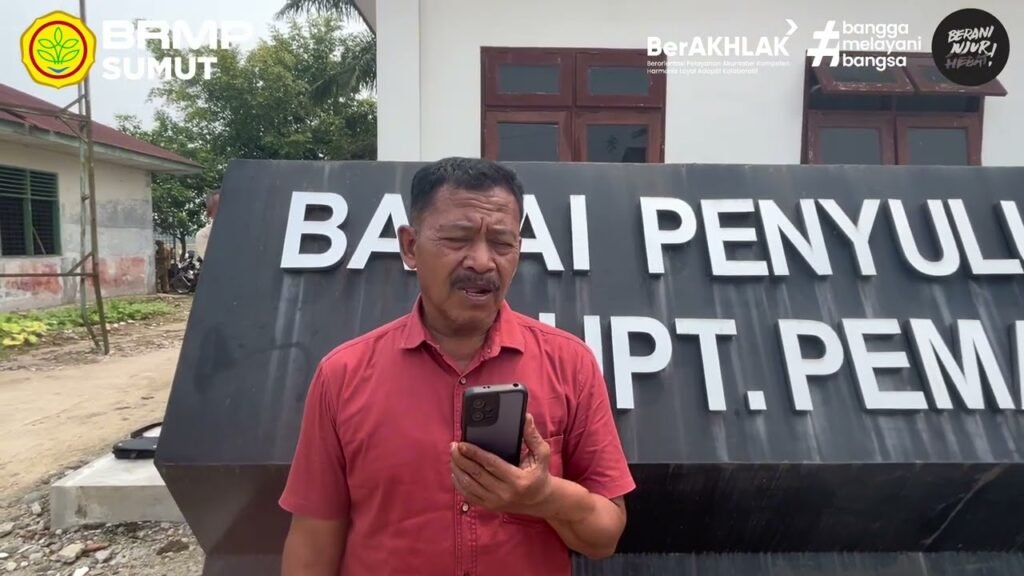
PANTAI LABU – Public outcry regarding the operational activities of livestock company CV Putra Jaya Farm in Dusun VI, Pematang Biara Village, Pantai Labu District, Deli Serdang Regency, North Sumatra, has escalated once again.
Following prior complaints regarding pungent odors and animal waste spilling over into agricultural lands, local farmers are now grappling with severe economic losses as their seasonal rice yields have dropped dramatically.
One affected farmer, identified as Bu (35)—also known as Di—expressed severe disappointment over his drastically reduced harvest compared to previous seasons. He strongly suspects that the toxic runoffs from the nearby livestock farm contaminating his paddy fields are the primary cause of this agricultural failure.
“Last year’s harvest was fairly decent; I could harvest around 15 sacks of rice. But this year, I couldn’t even reach 10 sacks. I am convinced this drop is due to the livestock waste entering our fields. The young rice stalks are failing to multiply, many are snapping, stems remain abnormally short, and the crops are infested with fungal diseases,” Bu said when interviewed by reporters on Wednesday (September 2, 2026).
According to Bu, the pollution issue extends beyond destroying crop quality—it has also severely disrupted the harvesting process. He revealed that local farmworkers are refusing to work in his fields due to the disgusting condition of the mud infused with livestock manure.
“The farmhands are utterly disgusted because animal feces have mixed directly into the paddy water. In the end, I had no choice but to get into the mud myself and help manually harvest the rice with a sickle,” he lamented.
Bu noted that heavy machinery, specifically an excavator, was recently spotted operating around the livestock farm. Based on local information, the equipment was deployed to dredge the manure storage area and construct earthen dikes or embankments.
However, residents deem these emergency measures completely inadequate. Earthen embankments are highly vulnerable to erosion and structural collapse during torrential rains, which could trigger even larger waste overflows into surrounding agricultural lands.
Therefore, residents are demanding that the management of CV Putra Jaya Farm erect a permanent concrete barrier surrounding the entire perimeter of the facility.
“If it’s just an earthen dike, heavy rainfall will easily wash it away, and the waste will flood our fields again. My only request is for them to build a proper concrete wall so that the waste is permanently contained,” Bu emphasized.
This recent complaint exacerbates long-standing grievances expressed by the local community regarding the environmental degradation caused by the facility’s manure management. Residents stress that temporary fixes applied only after heavy rainfall floods their fields are no longer acceptable.
Consequently, residents are urging the Deli Serdang Environmental Office (DLH), together with the Pantai Labu District Government and relevant regulatory agencies, to conduct an immediate, comprehensive on-site inspection.
They demand that local authorities thoroughly investigate the livestock farm’s waste treatment system, verify its legal operating permits, and evaluate the full extent of the environmental and economic damage inflicted on local farmlands.
Furthermore, residents insist that the government enforce strict sanctions and mandatory corrective actions if waste management violations are discovered, ensuring that such hazardous spills do not recur.
For the community of Pematang Biara, the presence of commercial livestock farms is not inherently prohibited, provided they operate in full compliance with environmental regulations without harming local livelihoods. However, they firmly maintain that public farmlands must not be treated as a dumping ground for corporate animal waste.
Residents are now waiting for swift, concrete intervention from both the local government and CV Putra Jaya Farm management to resolve this pollution crisis permanently before the damage spreads further across neighboring agricultural fields in Deli Serdang.
Under Law No. 32 of 2009 on Environmental Protection and Management (UU PPLH), commercial business entities are strictly obligated to process and treat waste generated from their operational activities prior to discharging any residue into public ecosystems. In the livestock sector, improper disposal of high-nitrogen manure into agricultural waterways can trigger severe soil acidification and nutrient toxicities, resulting in stunted plant growth, root rot, and heightened susceptibility to agricultural pathogens.
Deli Serdang Regency is widely recognized as one of North Sumatra’s primary agricultural hubs and rice granaries. Recurring environmental contamination incidents in productive agricultural zones such as Pantai Labu pose a direct threat to regional food security targets. Local agricultural analysts note that if environmental degradation continues unaddressed, smallholder farmers may face worsening financial instability, potentially leading to widespread farmland abandonment across affected coastal districts.